OPen
Client:
Deutsche Welle
'Masters of exclusion': Augusta still wrestling with image
Client
Deutsche Welle
Year
2021
Scope of Work
Words, Interviews
Location
Augusta, USA
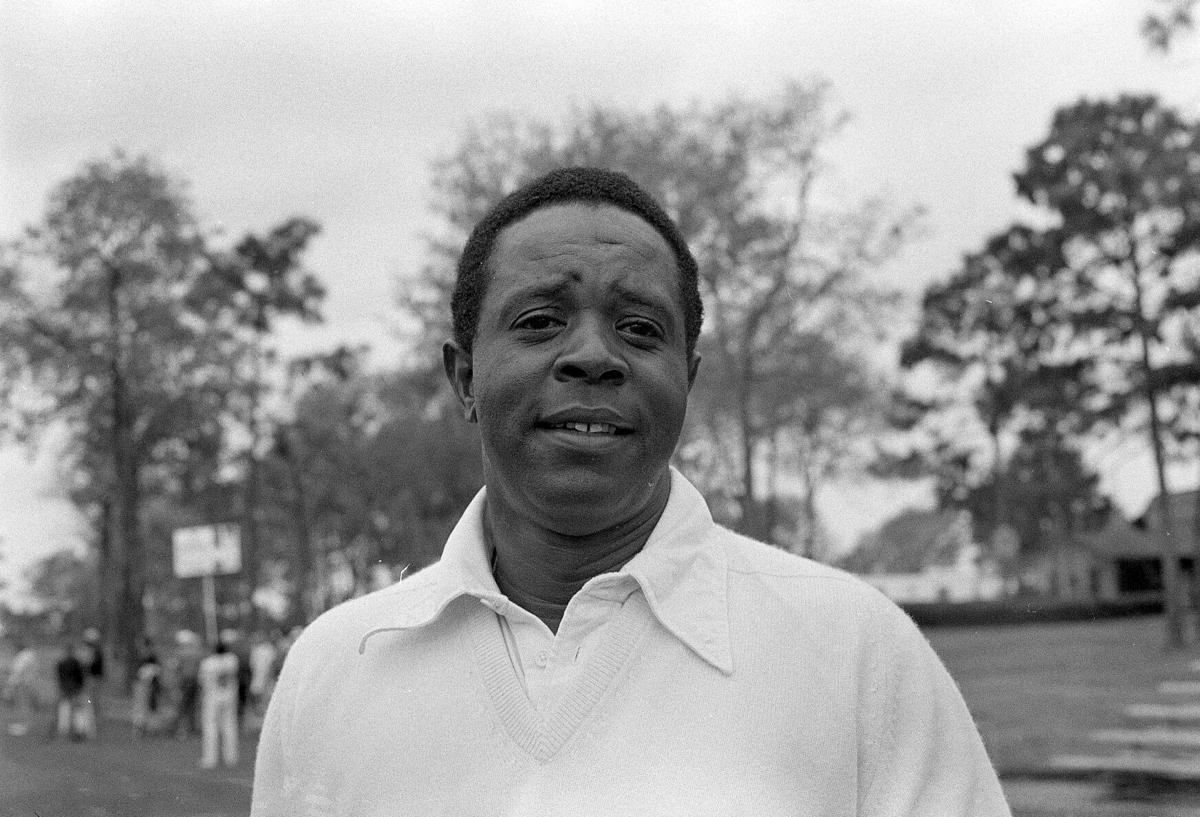
Lee Elder's legacy as a golfing pioneer will be cemented on Thursday, when he takes his place alongside Jack Nicklaus and Gary Player to raise the curtain for this year's US Masters.
Elder has been invited to hit the ceremonial first shot of a tournament where he made history in 1975,when he became the first Black player to receive an invite to Augusta following his victory at the Monsanto Open in Florida a year earlier.
The gates to the rolling fairways and pristine greens of Augusta National had been locked to Black players for over 40 years before that. If a Black person wanted to get access to the course, their options were limited to catering, cleaning or, in the best-case scenario, caddying.
The club admitted its first Black member in 1990 and granted membership to a woman for the first time in 2012. So,in2021, it shouldn't be surprising that Augusta National still lags well behind most other sporting events when it comes to inclusion.
Golf has been slow to honor its Black heroes. Elder has had to wait until the age of 86 to receive this recognition, and Jim Dent, an Augusta native and 12-time winner on the PGA Tour, was in his 80s when the entrance road to the Augusta Municipal Golf Course was renamed Jim Dent Way in his honor in June 2020.
Charlie Sifford won the Negro National Open five times in a row in the 1950s. By the time he became the first African-American to join the PGA Tour in 1961, most of his best years were behind him. On the tour, Sifford was banned from some clubhouse restaurants and targeted by racist abuse and threats. He was honored with the Medal of Freedom by President Barack Obama in 2014 a few months before hisdeath, aged 92.
Tiger Woods, a five-time Masters winner and arguably the most famous golfer of all time, named his son Charlie, after Sifford. Without Sifford, there would have been no Woods.
While gestures from the Masters are a first step, it remains little more than tokenism until Augusta National — and golf as a whole — makes steps to show it is serious about inclusion. Partnerships with Black businesses and appointments of African-Americans to positions of influence within the game of golf remain seldom.
"Changes are being made slowly but surely," Walker said. "Since the death of George Floyd, we have seen scholarships and training programs for African-Americans, and the community appreciates it. But they have been known as the 'Masters of Exclusion.' I believe it is high time that the Masters change the message of exclusion to the Masters of Inclusion."
'Illusion of inclusion'
Despite the sporting achievements of Elder, Dent, Sifford, Woods and many other Black players,golf's decision-makers remain overwhelmingly white and male. Of the19-strong board of directors at the PGA of America, 18 are white and 16 are men— none are African-American.
One of the few African-Americans to work at PGA of America, Wendell Haskins, was initially brought in as senior director of diversity and multicultural initiatives in2014 — but he soon discovered that his role gave him very little decision-making power.
"I was brought in as a Black man in a diversity role because it fit the optics of what was needed at the time. But there was no real power or authority to do the things that needed to be done," Haskins told DW.
"I took the role with the best of intentions to do things at a very high level: to move past the dark history of golf," Haskins said. "The death of George Floyd is forcing people to make adjustments — and golf is no different — but it didn't happen through intellectual discourse. It had to happen through a catastrophic event and because everyone else is doing it.
"So, when a Black person gets hired in a diversity role or as an influencer, I see it as segregation. 'We're going to give you something so we're going to make you in charge of the Black thing, so we can tick that box.' It's the illusion of inclusion, because inclusion isn't a game, it's not for show: You're either committed to equality or you're not."
Bittersweet moment
Despite the absence of most spectators in Augusta because to the pandemic, Elder's first shot on Thursday will be a bittersweet moment for Haskins.
It will be satisfying to see the man who made Masters history honored for his groundbreaking achievement, but bitter because the idea for Elder to be an honorary starter at Augusta was tabled by Haskins during his time at the PGA of America. Augusta National has taken the idea and made it central to its plans, but Haskins hasn't been given so much as a thank you for his role in making it happen.
"First and foremost, I will be delighted for Lee and his family," Haskins said. "He's86 and, just like Charlie Sifford and Jim Dent, they've fought a lot of injustice and overcome so many barriers — so these moments of recognition in their twilight years means a lot to them. It will be historic and will mean a lot to a lot of people, including me.
"For me personally to have originated this idea and not be included is a disappointment. I created moments like this at my own golf tournament, the Original Tee Golf Classic,already honoring Lee Elder in 2015, and dreamed of doing the same at the highest level. So not being recognized for the role I played hurts a bit."
'Talk is cheap'